


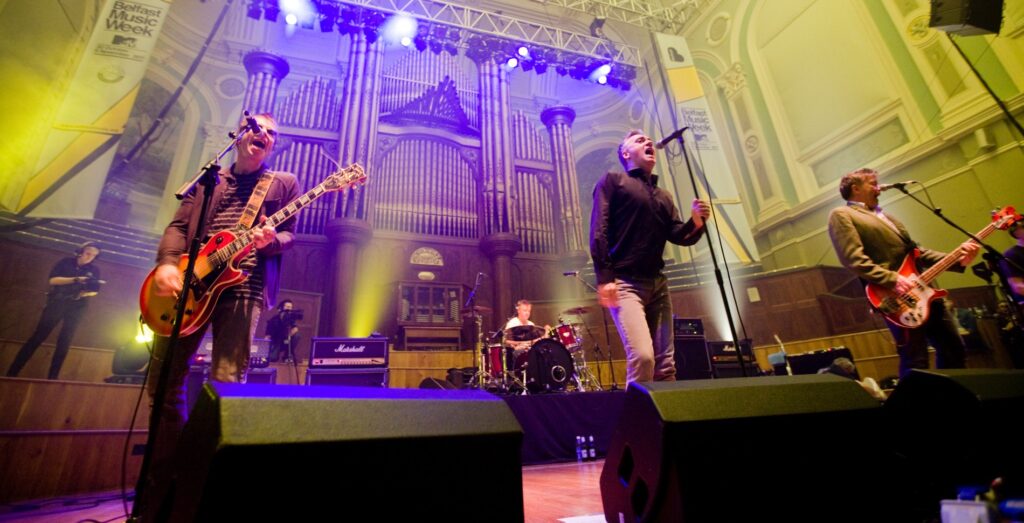
Ireland continues to produce exceptional musical talent, but talent alone does not create a live music ecosystem. A functioning live music pipeline depends on something less visible and far less discussed: operational infrastructure — the promoters, crews, compliant venues, local authority processes and repeatable delivery systems that allow events to happen week after week, town after town.
Recent discussions at the Joint Committee on Arts, Media, Communications, Culture and Sport examining Ireland’s live music industry have rightly focused on artist support and venue sustainability. However, without rebuilding the operational backbone of delivery, support at the top of the pipeline will not translate into sustained grassroots activity.
1. Promoter Attrition Since Covid
Post-pandemic recovery did not simply result in revenue loss, it resulted in delivery loss. Across small and medium towns, many independent promoters have exited the market due to:
- Financial exposure and personal liability
- Insurance volatility
- Increased compliance complexity
- Reduced margins at grassroots level
When promoters disappear, events disappear, and when when events disappear, emerging artists lose stages. Rebuilding promoter confidence is as critical as supporting performers.
2. Crew Shortages and Skills Gaps
The events industry lost technical crews, production managers and experienced event staff during Covid. Many transitioned to other sectors and have not returned.
The result:
- Rising crew costs
- Capacity bottlenecks
- Increased safety pressure on smaller teams
- Reduced feasibility for lower-margin shows
Artist funding cannot compensate for the absence of trained delivery personnel.
3. Insurance and Compliance Burdens
Insurance is increasingly acting as a de facto regulator of the events industry. For small organisers, premium increases, exclusions and indemnity requirements are creating barriers to entry. Combined with inconsistent local permitting processes, this generates uncertainty and discourages risk-taking at grassroots level. Clarity, proportionality and national coordination in event permitting would directly stabilise the insurance environment.
4. Volume Collapse in Small and Medium Towns
Ireland’s live music ecosystem cannot rely solely on major cities and large-scale festivals.
The pipeline depends on:
- Weekly venue programming
- Seasonal outdoor town events
- Mid-scale touring circuits
In many counties, the frequency of live music events has not returned to pre-Covid levels. This affects not only artists, but hospitality, tourism, and local economies. If the volume base erodes, the national talent pathway narrows.
5. Night-Time Economy Supports: Progress, But Limited Structural Assessment
Ireland has made positive steps in recognising the Night-Time Economy, including:
- Appointment of Night-Time Economy Advisors
- Pilot initiatives in urban centres
- Purple Flag accreditation in designated areas
However, these initiatives largely focus on vibrancy and safety perception rather than delivery infrastructure capacity.
There has not yet been a national assessment of:
- Promoter density by county
- Venue compliance readiness
- Production crew availability
- Insurance accessibility
- Local authority event processing capacity
- Event frequency trends by town size
Without baseline data, policy cannot be accurately targeted.
At the recent Oireachtas engagement, the Irish Music Rights Organisation was asked to provide a national overview of venues. This presents an important opportunity. Venue data is one part of the picture, it forms the literal foundations, but venues alone do not create events.
A comprehensive national assessment should integrate:
- Venue mapping
- Promoter activity levels
- Event volume metrics
- Local authority permitting workflows
- Night-Time Economy funding impact
6. The Case for County-Level Event Strategies
If Ireland is serious about strengthening its live music ecosystem, it must move beyond reactive support and towards structured delivery planning. Each county and city should develop:
- A local strategic event delivery plan (based on a national strategic plan)
- Clear permitting pathways
- Promoter support mechanisms
- Training and crew development initiatives
- Insurance engagement frameworks
This should sit within a coordinated National Events Plan supported by a National Events Support Office and a Centre of Excellence model to build consistency across local authorities.
Conclusion
Ireland does not lack musical talent, what it risks lacking is a repeatable, locally enabled, safe and commercially viable delivery system that allows talent to progress. Artist support is necessary, operational infrastructure is essential.
The next phase of live music policy must focus on rebuilding delivery capacity, from the ground up.